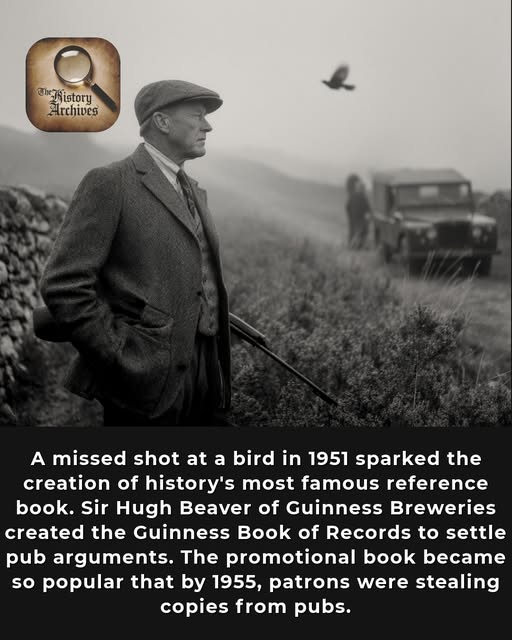
In 1951, a heated argument broke out during a hunting trip in Ireland. Sir Hugh Beaver, head of Guinness Brewery, debated with friends about Europe’s fastest game bird.
Unable to find a definitive answer, he realized how many similar disputes occurred in pubs across Ireland and Britain. 
This simple argument sparked an idea. In 1954, Beaver hired twins Norris and Ross McWhirter to research and compile what would become the Guinness Book of Records.
Initially meant as a promotional item for pubs to settle arguments, the first edition was published in 1955.
The book was an instant success. The first 1,000 copies, printed with beer-resistant covers for pub use, flew off the shelves. By Christmas 1955, it became a British bestseller.
Ironically, the original question about the fastest game bird wasn’t even answered in the first edition.
What started as a way to end pub arguments transformed into a global authority on achievements and records.
The red-breasted merganser was later confirmed as Europe’s fastest game bird, flying at speeds up to 100 mph.


