Before the famous trails were even well-trod, 18-year-old Nancy Kelsey, with her infant daughter in her arms, crossed the hostile Sierra Nevada mountains in 1841. 
She was part of the first wagon train to travel overland to California, a journey with no maps and no marked path, fueled by little more than gritty determination and an unwavering trust in Divine Providence.
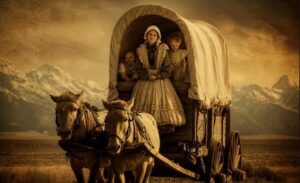
The stories of the West often focus on the men, but it was women like Nancy who were the heart of these journeys.
While men often handled the oxen and defenses, the women managed everything else. They were responsible for rations, cooking over open fires, mending clothes, and tending to the sick and injured with limited supplies.
History has largely forgotten Nancy’s name, instead focusing on later pioneers like 66-year-old Tabitha Brown, who led her own family group through near-starvation on the Oregon Trail in 1846.
These women were not just passengers. They faced cholera outbreaks, starvation, and the constant threat of the unknown with incredible fortitude.
They buried their loved ones on the trail and had to find the strength to keep moving forward for the sake of the living.
Their quiet leadership and resilience, often grounded in faith, were the true foundations upon which homes, communities, and a new life in the West were built. 


